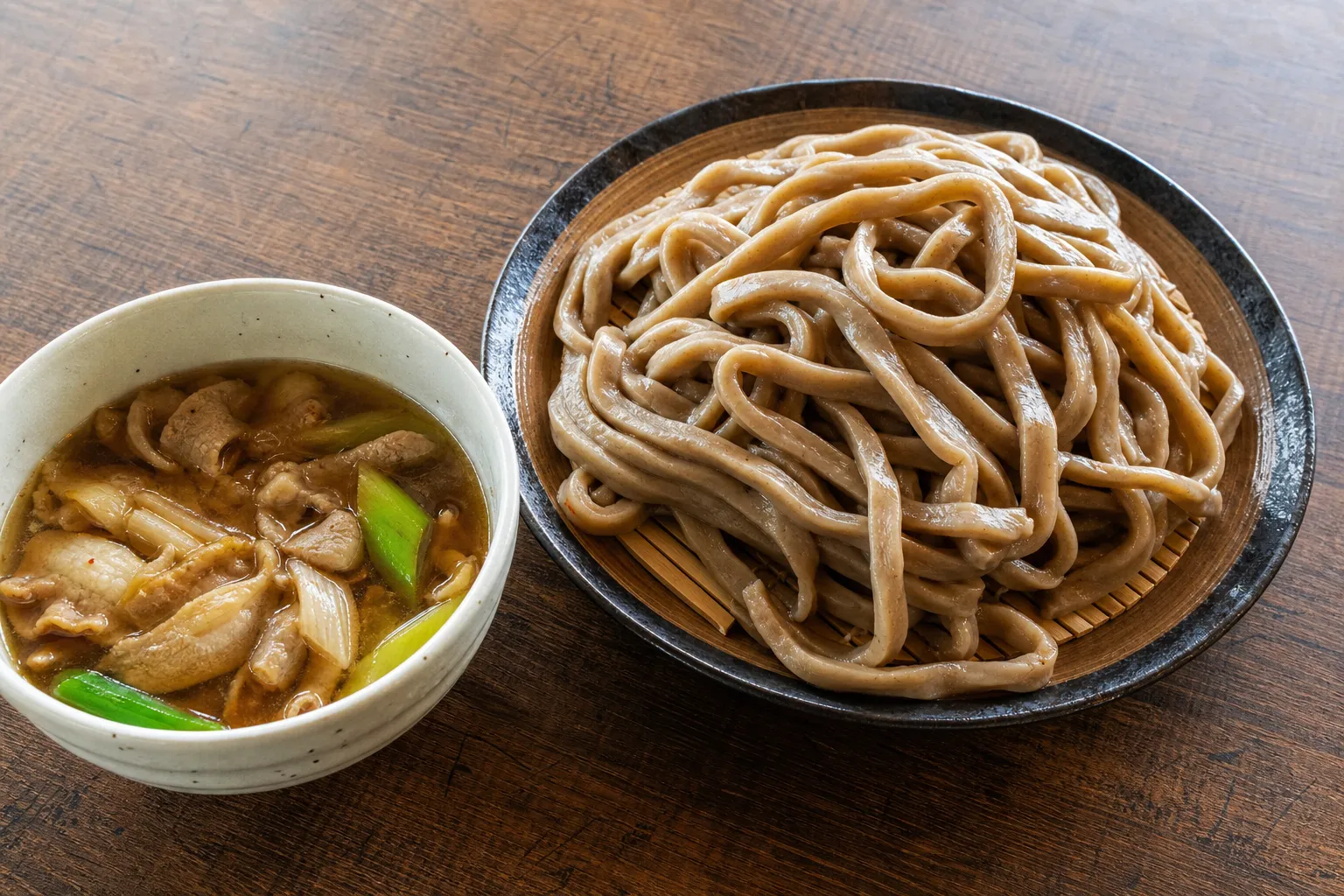
My jaw got tired. I mean that as the highest compliment. The first chew told me these noodles were not messing around — thick, dense, aggressively springy, pushing back against my teeth like they had somewhere better to be. I dunked another wad into the hot, porky broth, slurped, chewed, chewed some more, and grinned like an idiot. This is udon that makes you work, and by the end of the basket I was completely, chewily in love.
Share this dish


Udon with a jaw workout — thick, brownish, room-temperature noodles so defiantly chewy you dunk them into a hot, smoky pork-and-vegetable broth and just... go to town. Saitama farm food that fights back.
🍜 Planning a food trip to Saitama?Add this dish to my Food Trip →
 Add this dish to my Food Trip →
Here's what it is: Musashino udon (武蔵野うどん) is a very firm, chewy, brownish thick udon made from local wheat, served at room temperature on a plate or basket with a hot pork-and-vegetable dipping broth (tsukejiru) on the side. You dip and eat. It's the farm food of Saitama and western Tokyo — the old Musashino plain. And to be clear: it's not soft udon floating in soup, and it's not Yamanashi's hoto. The chew is the whole personality.
Wheat-country food from the Musashino plain
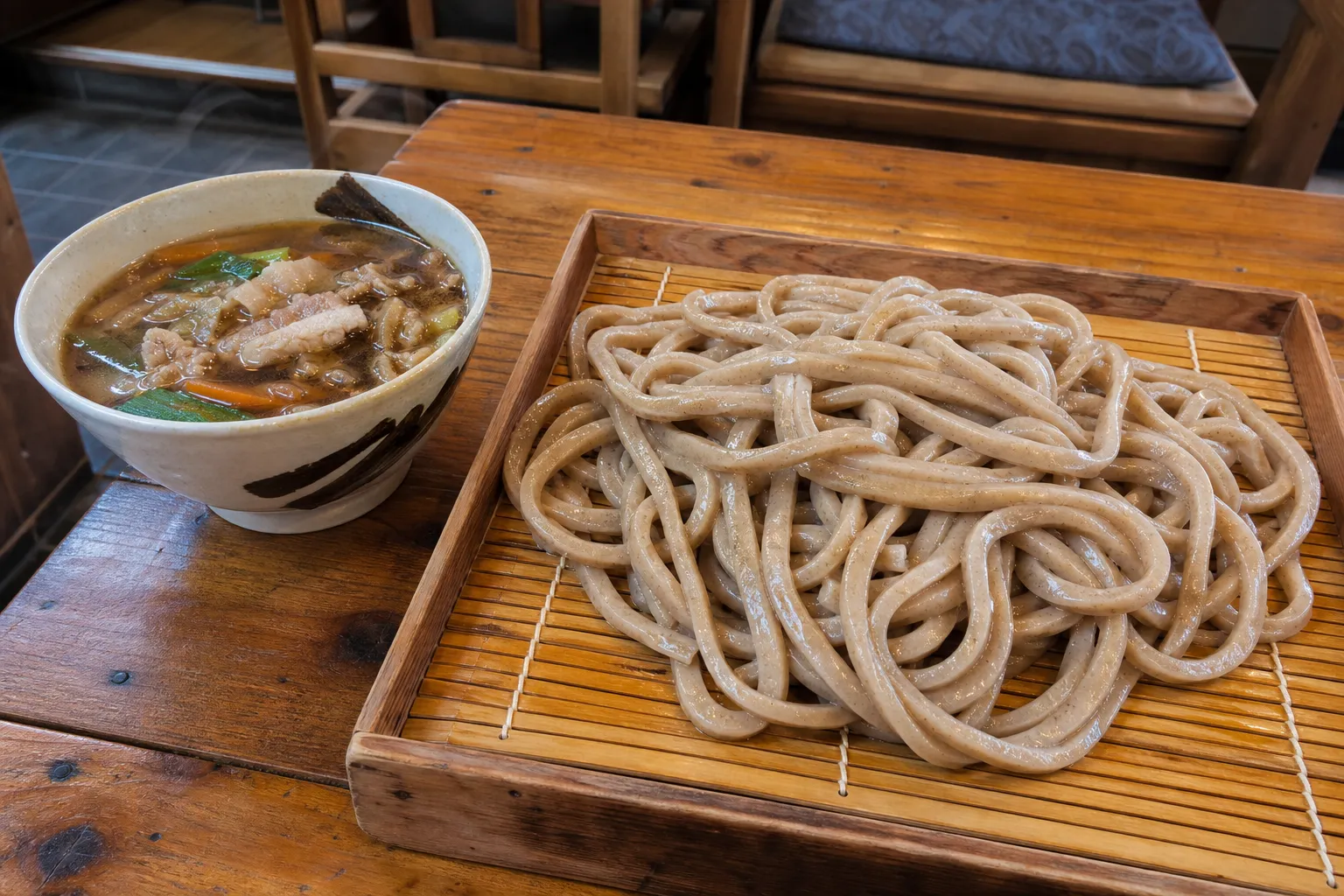
The Musashino plain — Saitama and the western edges of Tokyo — has soil and climate better suited to wheat than to rice, and for generations that meant udon was the everyday, everyone-can-make-it food of the region's farming families. This wasn't delicate restaurant udon; it was hearty home cooking, hand-rolled thick, made to fill up hungry people after work. The brownish color comes from using more of the local wheat (less refined flour), and the firm chew comes from a stiff dough and a good long rest and knead. It's honest, sturdy, rural food, and you can taste the history in every dense bite.
I love that this survives as a daily thing, not a museum piece. Around Saitama it's still genuinely local — the noodle everyone's grandmother made, dunked into a broth simmered with pork and whatever vegetables were around. The dipping style keeps the noodles firm (no soaking soft in soup) and lets the hot, fatty, deeply savory tsukejiru do the flavoring. Simple parts, big satisfaction. It's the kind of regional food that rewards you for seeking it out instead of settling for the version at the station.
What makes the eating experience different
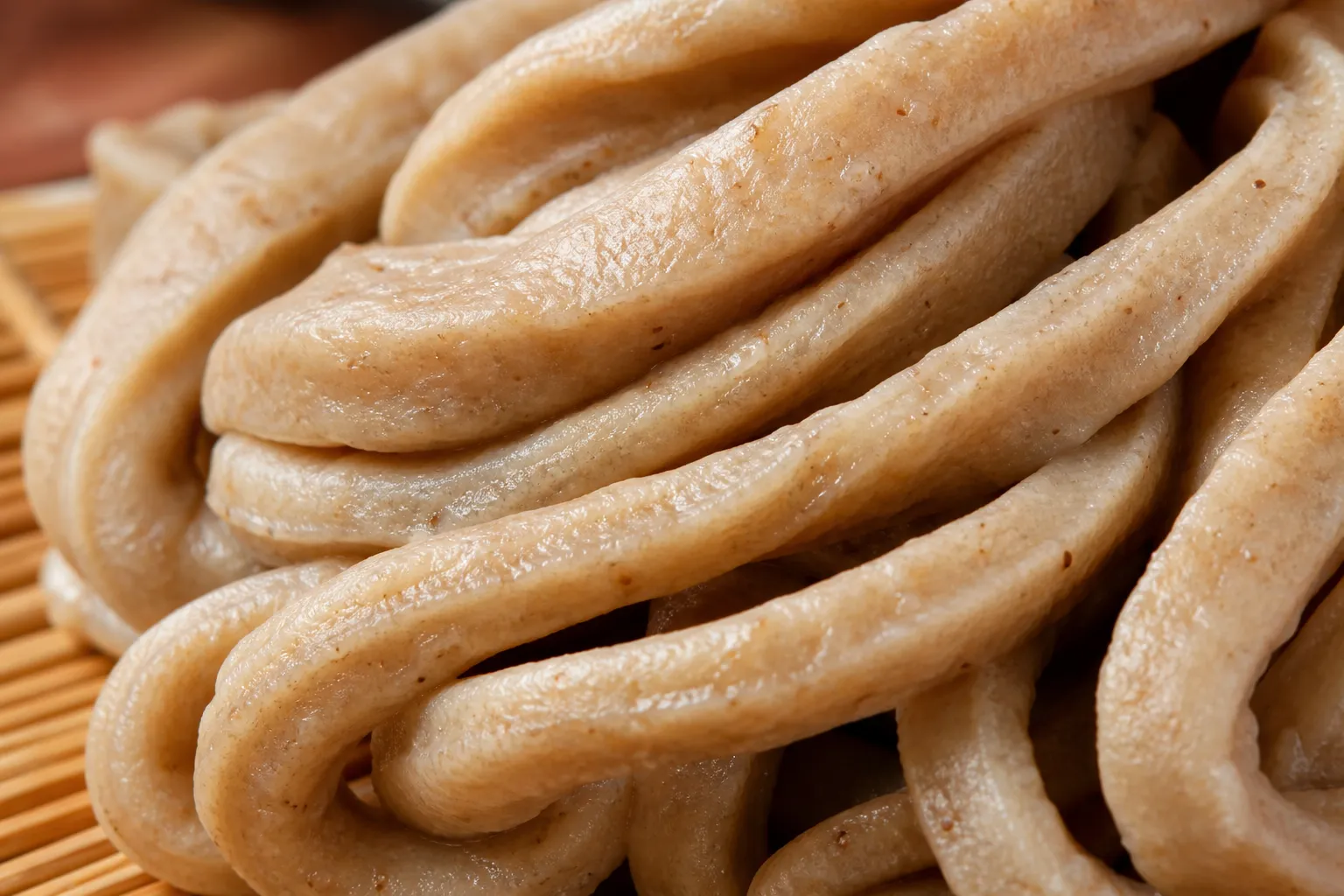
- The chew is legendary — thick, dense, springy noodles that genuinely make your jaw work (a badge of honor here)
- They're brownish, not pure white, because of the fuller local wheat — earthier flavor, rustic look
- Room-temperature noodles, hot dipping broth — you dunk each bite, so the noodles never go soft
- The tsukejiru is porky and vegetable-rich — often simmered with pork and seasonal veg for a smoky, savory hit
- It's farm-hearty and filling — this is food built to satisfy hungry working people, and it does
How it's made
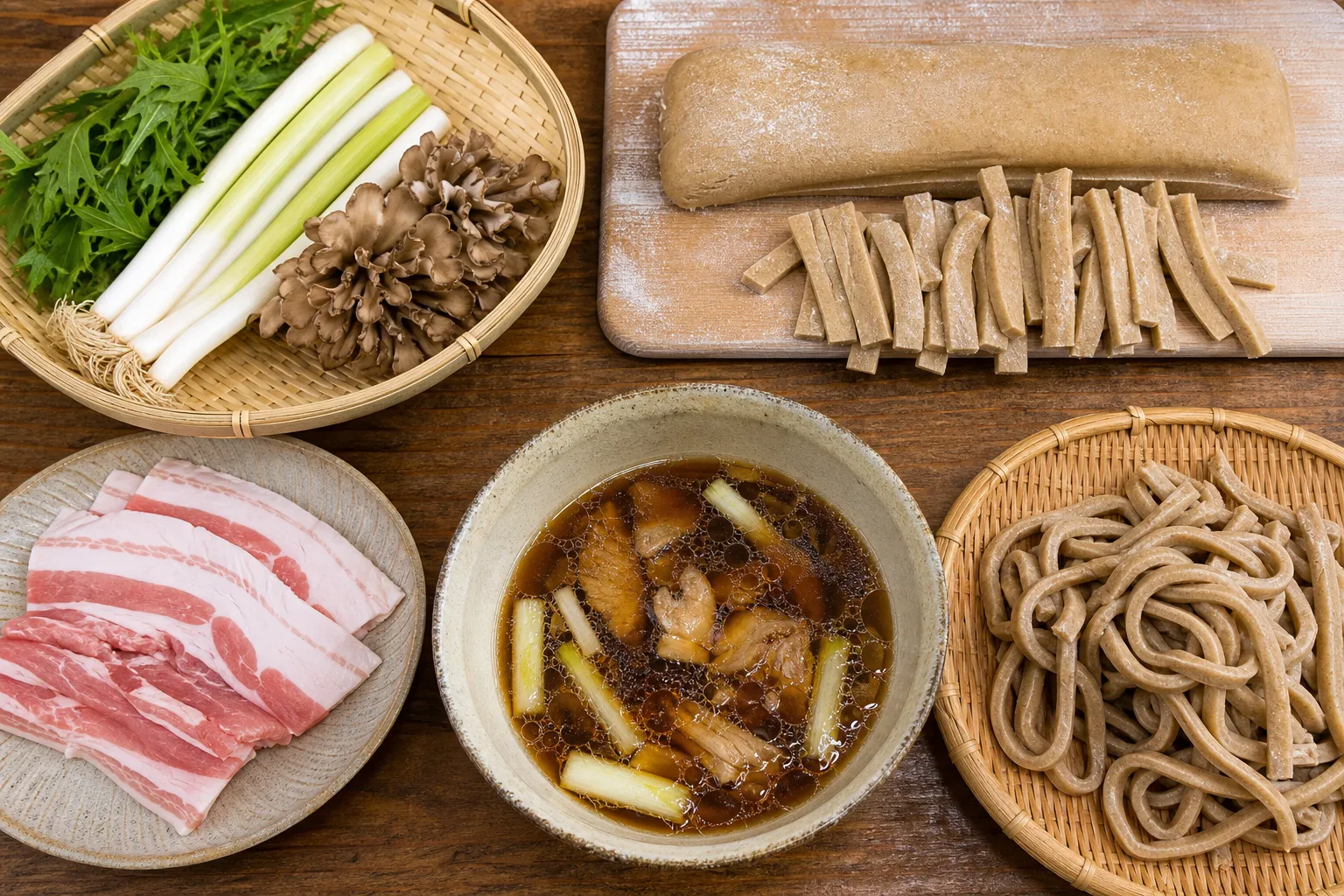
- Make a stiff dough. Local wheat flour is mixed with salt water into a firm, low-hydration dough — stiffer than most udon.
- Knead, rest, roll. The dough is kneaded hard (traditionally even underfoot), rested, then rolled out thick and cut into wide, hefty noodles.
- Boil firm. The noodles are boiled and then rinsed in cold water, which tightens them up and sets that signature chew; they're served at room temperature.
- Simmer the broth. A hot tsukejiru is made — dashi and soy deepened by simmering pork and seasonal vegetables (often with a little heat and fat).
- Dip and eat. Noodles come on a basket or plate; you dip each bite into the hot broth and slurp, chewy bite after chewy bite.
The craft is all in the dough and the boil — enough stiffness and enough cold-rinse tightening to hit that famous, jaw-working chew.
Before you go — come hungry, dip don't soak
Your questions, answered honestly
"Why are the noodles so hard to chew?" — That's the point, not a mistake. Musashino udon is prized for its firm, dense chew — a stiff dough and a cold-water rinse make it that way. Locals love it precisely because it fights back. Lean in.
"Is it in soup like normal udon?" — No — the noodles come separately at room temperature, and you dip them into a hot pork-and-vegetable broth (tsukejiru). Dipping keeps them firm. Don't dump the noodles into the broth to soak.
"Isn't this the same as hoto?" — No. Yamanashi's hoto is flat noodles simmered soft in a miso-vegetable stew. Musashino udon is thick, chewy, room-temperature noodles dipped in a separate hot broth. Different region, different everything.
"Will I have leftover broth?" — Often, yes, and that's normal — the strong dipping broth is meant to season each bite, so it's usually saltier and richer than a drink-it-all soup. Some shops will thin it with hot water at the end if you want to sip it.
What the staff will ask you
| You'll hear | Romaji | Meaning | Just say |
|---|---|---|---|
| 温かいつけ汁でよろしいですか? | Atatakai tsukejiru de yoroshii desu ka? | "Hot dipping broth, okay?" | Hai, onegaishimasu (yes, please) |
| 量は普通でいいですか? | Ryō wa futsū de ii desu ka? | "Regular portion okay?" | Ōmori de (large, please) |
| 肉つけ汁にしますか? | Niku-tsukejiru ni shimasu ka? | "The pork dipping broth?" | Sore de onegaishimasu (that one, please) |
To order, just say "Musashino udon o kudasai" (武蔵野うどんをください) — "Musashino udon, please."
Where to eat it
- Saitama Prefecture — the heartland. Dedicated udon shops across Saitama (the old Musashino area) serve the thick, chewy, dip-style noodles; many are unassuming local specialists.
- Western Tokyo (Tama area) — the Musashino plain stretches into western Tokyo, so you'll find genuine versions in the Tama-region towns too.
- Local udon specialists and farm-style shops — because it's everyday regional food, small owner-run shops often make the best, most traditional versions; ask locally for a favorite.
Musashino udon is a Saitama/western-Tokyo everyday specialty served at small local shops — hours and menus vary, so check before you go, and come hungry enough for the chew.
Soul Score
Local Roots5/5
First-Timer Friendly4/5
Adventure Level3/5
Comfort Level4/5
Travel Worthy3/5
These scores are one obsessed eater's gut feeling — not a verdict. A low number isn't a bad mark, just a different kind of adventure.
Know someone planning Japan?
← All Articles
Local Food · Saitama
Still hungry?
Eat more from Saitama
Local FoodGyoda, Saitama
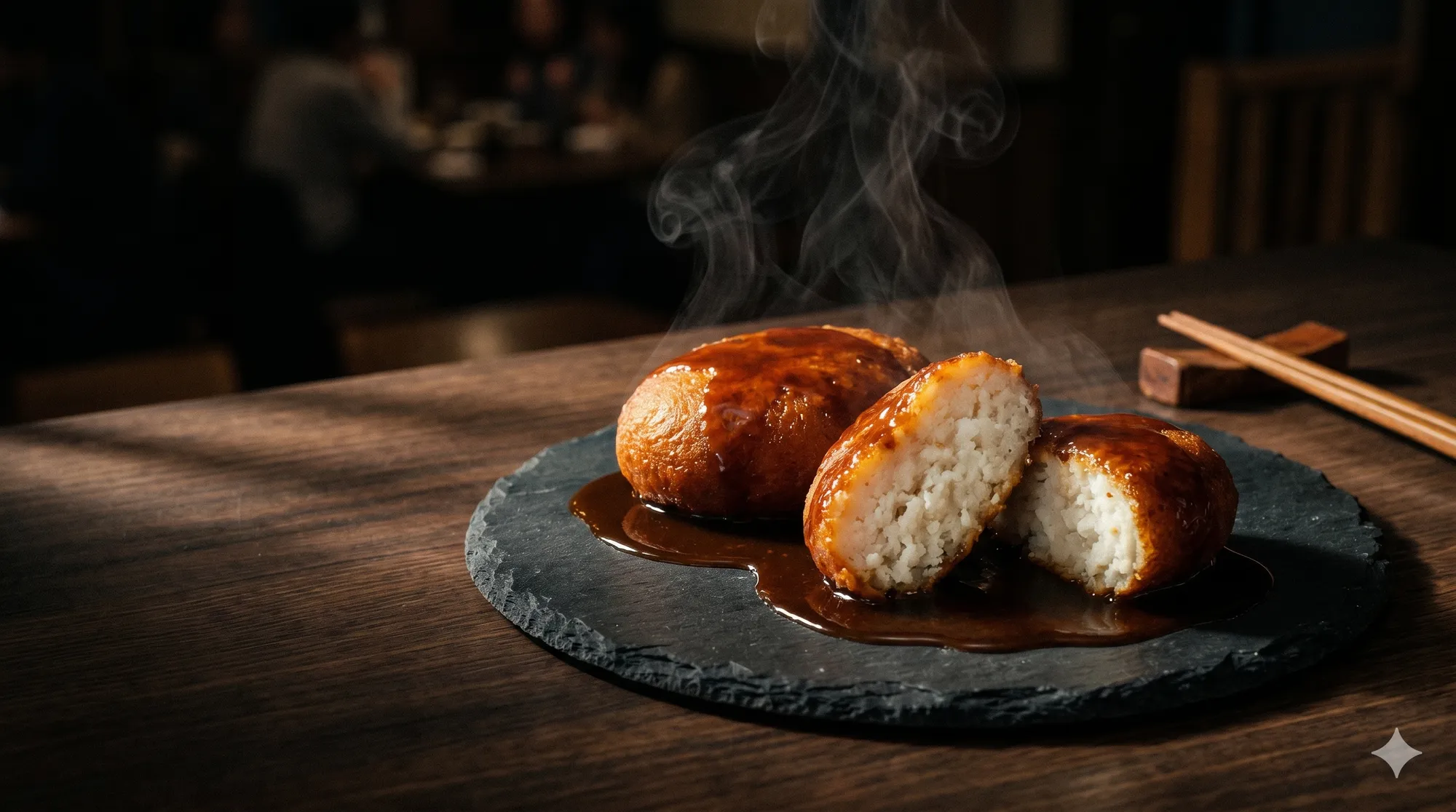
Zeri Fry (ゼリーフライ)
It's not jelly. It's not even really 'fry.' It's a coin-shaped okara-and-potato patty named after old money — and it's one of the weirdest, most lovable snacks in Japan.
July 21, 2024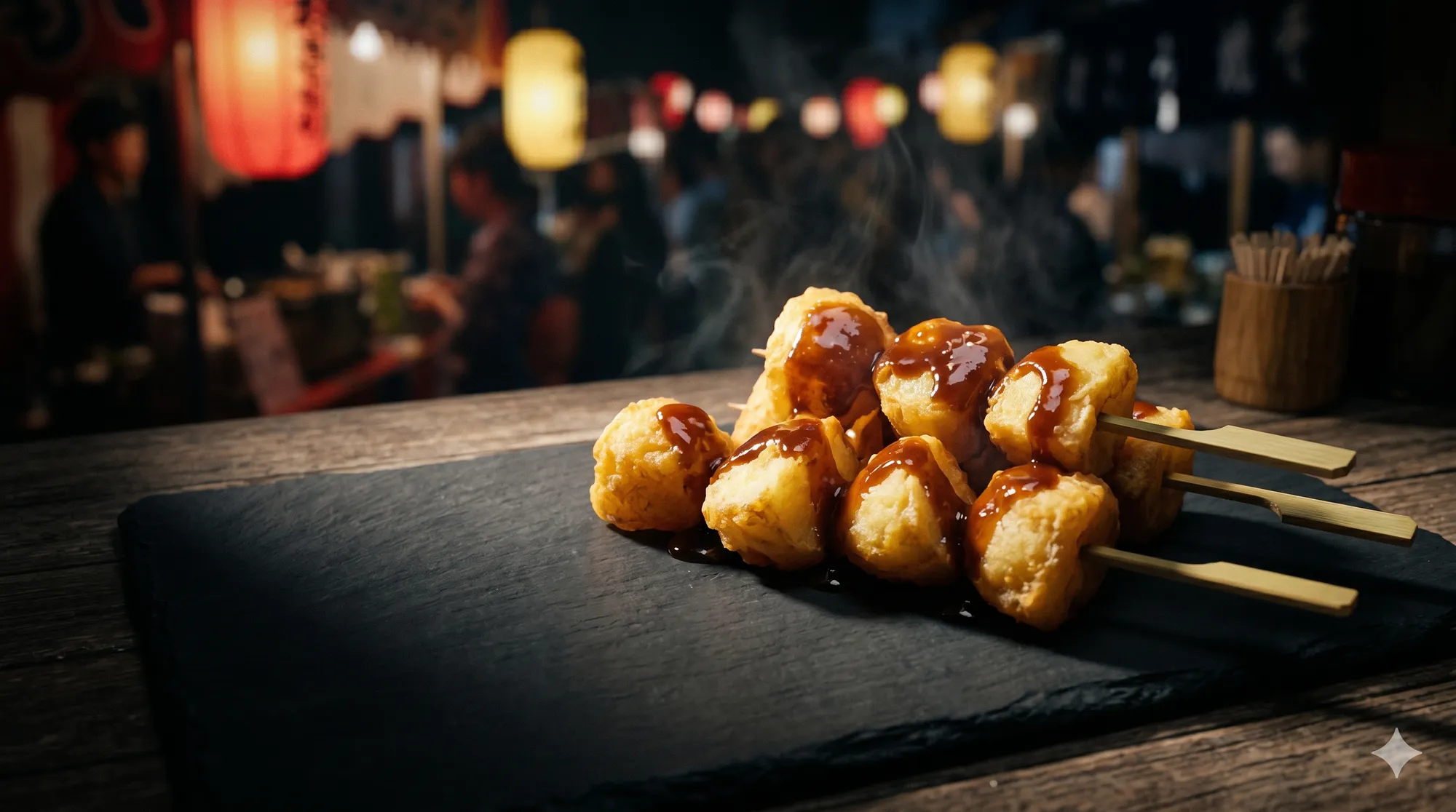
Local FoodChichibu
Miso Potato (みそポテト)
Fluffy fried potato on a stick, drowned in sweet miso. It's a farmer's snack from the Chichibu mountains, and it's the kind of simple that ruins you for fancy food.
July 20, 2024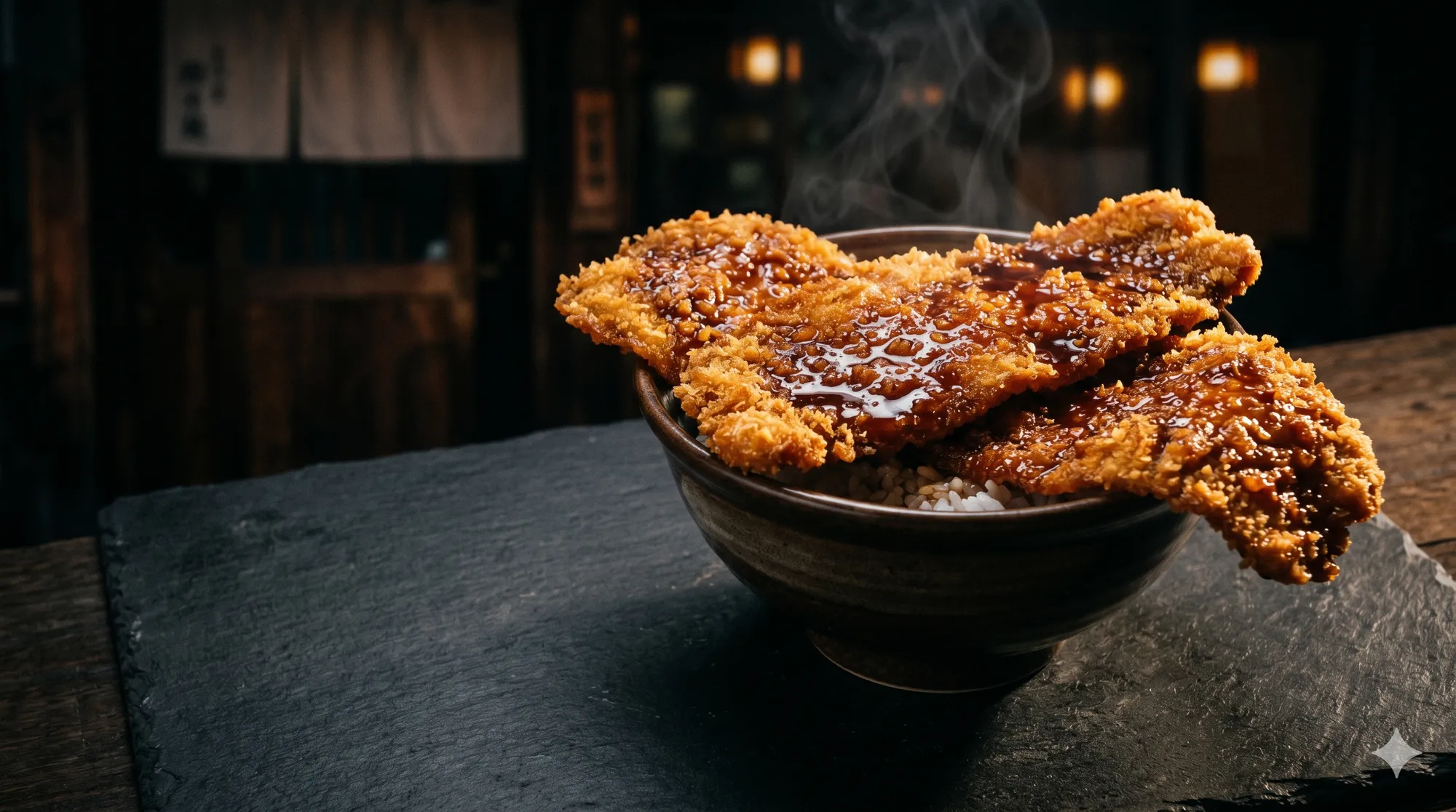
Local FoodChichibu
Waraji Katsudon (わらじカツ丼)
Two pork cutlets so big they're named after straw sandals, hanging off the bowl on every side. Chichibu's answer to the question nobody asked: what if katsudon, but more?
July 18, 2024