
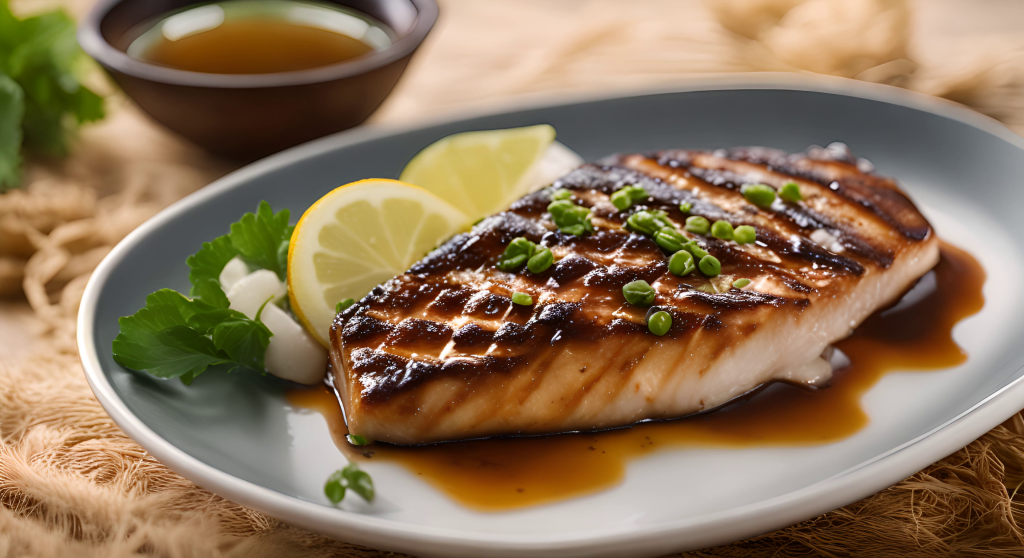
“Buri no Teriyaki”—just hearing the name conjures up the image of yellowtail glazed with a sweet and savory sauce, whetting your appetite. This dish is a staple in Japanese home cooking, especially enjoyed during the winter when yellowtail is in season.
History
Yellowtail has been cherished in Japanese cuisine for centuries. Winter yellowtail, known as “kan-buri,” is particularly prized for its rich, fatty flavor. The teriyaki cooking method, which involves a soy sauce and sugar-based glaze, dates back to the Edo period.
Characteristics
The hallmark of buri no teriyaki is the perfect harmony of the sweet and savory sauce with the rich flavor of the yellowtail. The sauce, made from soy sauce, mirin, sake, and sugar, coats the yellowtail, giving it a glossy finish. The fish’s fat melds with the sauce, creating a deeper, more satisfying flavor.
Preparation
To prepare buri no teriyaki:
- Prep: Sprinkle salt on the yellowtail fillets, let sit for 15 minutes, then pat dry.
- Make the Sauce: Mix soy sauce, mirin, sake, and sugar.
- Cook: Heat oil in a pan, sear the yellowtail on both sides until browned.
- Finish: Add the sauce to the pan, and simmer until it thickens and coats the fish.
Nutritional Value
Yellowtail is high in protein and rich in unsaturated fats like DHA and EPA, which are beneficial for heart health and brain function. The teriyaki sauce contains sugar, so moderation is key.
Cultural Significance
Buri no teriyaki is a beloved dish across Japan, often served during New Year celebrations and special occasions. Yellowtail is considered a lucky fish, symbolizing prosperity and happiness, making this dish a festive favorite.
Conclusion
Buri no teriyaki, with its sweet and savory glaze and rich flavor, is a standout in Japanese home cooking. Despite its simple ingredients and preparation, it offers a deeply satisfying taste. Experience the delightful flavors of buri no teriyaki and enjoy a special moment with this classic Japanese dish.
 Soul Food in Japan
Leave a comment