
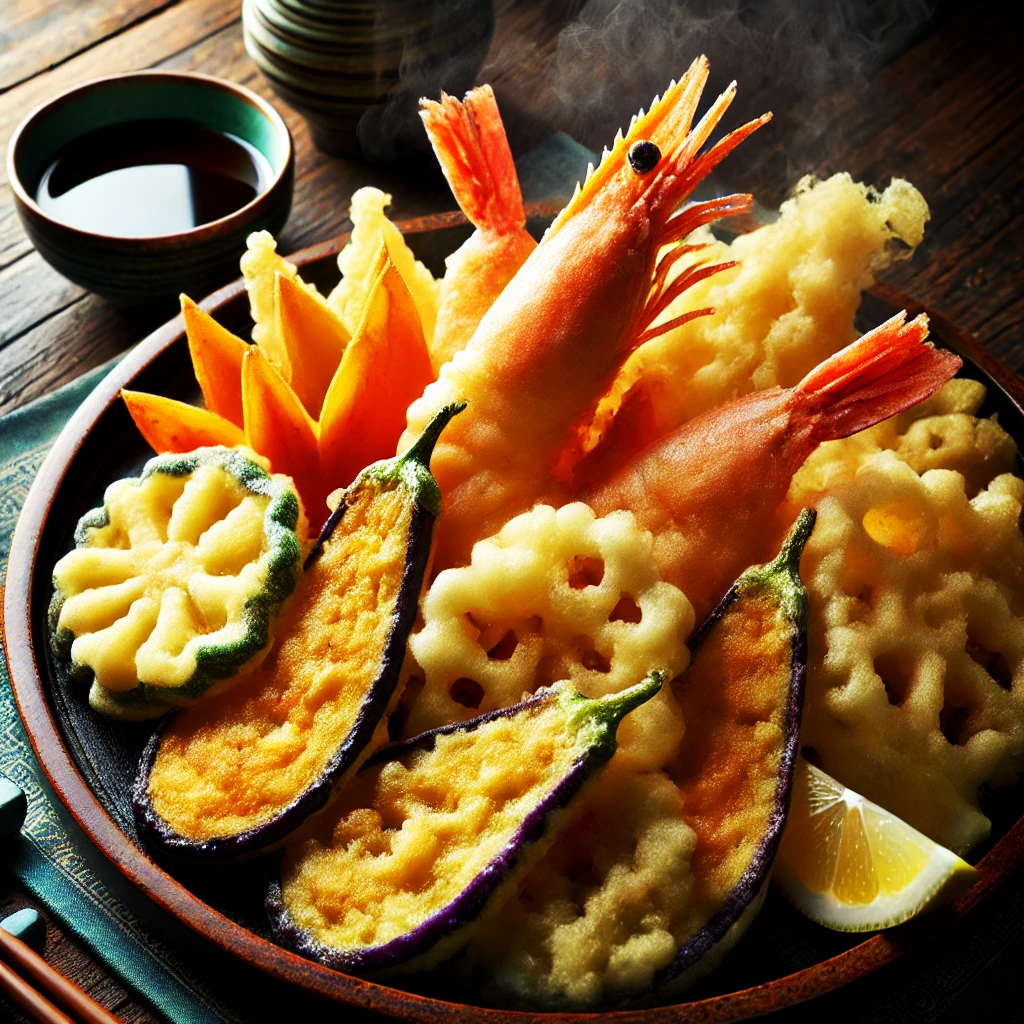
“Tempura”—just hearing the name conjures up the image of crispy batter encasing the fresh flavors of various ingredients, making your heart skip a beat. Tempura is one of Japan’s most iconic dishes, beloved both domestically and internationally.
History
The origins of tempura can be traced back to fried dishes brought from China during the Nara and Heian periods, but the form we know today has its roots in the 16th century when Portuguese missionaries introduced their cooking methods to Japan. The Portuguese dish “peixinhos da horta” is said to be the origin of the word “tempura.” During the Edo period, tempura gained popularity as a common street food, and today, it is enjoyed both in specialty restaurants and as home-cooked meals (Wikipedia) (Macaroni).
Characteristics
The hallmark of tempura is its light, crispy batter and the balance it strikes with the ingredients inside. Common ingredients include seafood like shrimp, whiting, and conger eel, as well as vegetables like sweet potatoes, shishito peppers, and pumpkin. It is often served with matcha salt, tentsuyu (a dipping sauce), or grated daikon radish. The batter is made by mixing flour, egg, and water, and using cold water ensures a crispy finish (Wikipedia) (Macaroni).
Tempura celebrates the natural flavors of its ingredients. Vegetable tempura offers a simple yet comforting taste, while seafood tempura highlights the rich flavors of the ocean. Classic items like shrimp and whiting tempura are perennial favorites, beloved by many. Using seasonal ingredients allows for a delightful variety of flavors throughout the year.
Preparation
The basic steps for making tempura are as follows:
- Preparing the Ingredients: Cut the ingredients into appropriate sizes and pat them dry thoroughly. Remove the shrimp’s vein and prepare the vegetables as needed.
- Making the Batter: In a bowl, lightly mix cold water, egg, and flour to make the batter. Using cold water helps achieve a crispy coating. Avoid over-mixing to keep the batter light.
- Heating the Oil: Heat oil in a pot to 170-180 degrees Celsius (340-360 degrees Fahrenheit). Maintaining the right temperature is crucial; too hot, and it will burn; too cool, and it will absorb too much oil.
- Frying: Lightly coat the ingredients in flour, dip them in the batter, and fry them in the hot oil. Fry until the batter turns golden and crispy, then drain the oil. The tempura will float and turn a light golden color when done.
Nutritional Value
Tempura retains the nutritional value of its ingredients due to the quick frying process. Seafood like shrimp and fish are high in protein and low in fat, while vegetables provide vitamins and dietary fiber. However, as a fried dish, it is higher in calories, so it’s important to enjoy it as part of a balanced diet. Using fresh, high-quality ingredients can make tempura healthier and more delicious (Wikipedia) (Macaroni).
Cultural Significance
Tempura is a beloved dish across Japan, with regional variations adding to its charm. For example, in Kansai (Western Japan), sesame oil is commonly used, while in Kanto (Eastern Japan), vegetable oil is preferred. Tempura restaurants often offer seasonal specials featuring fresh local ingredients, providing a unique dining experience (Wikipedia).
Tempura is commonly served in various forms such as tempura platters, tendon (tempura rice bowls), and tempura soba (tempura with soba noodles). It is also a popular home-cooked dish, frequently appearing on family dinner tables.
Conclusion
Tempura, with its delicate balance of crispy batter and flavorful ingredients, is a standout in Japanese cuisine. Despite its simple ingredients and straightforward preparation, the skill involved makes it a memorable dish. Be sure to experience the delightful taste of tempura and enjoy a special moment with this iconic Japanese dish.
Reference Links:
 Soul Food in Japan
Leave a comment