
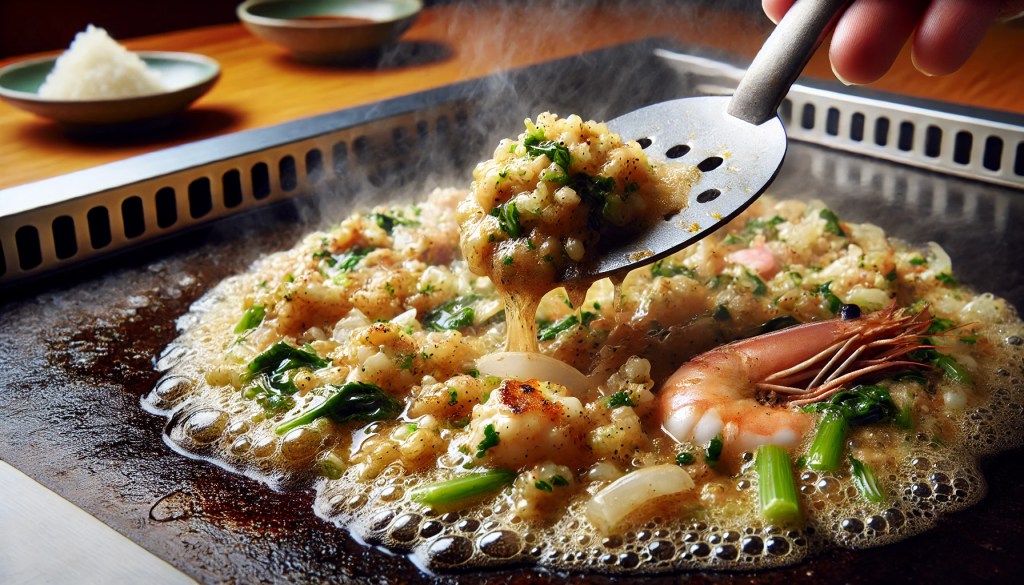
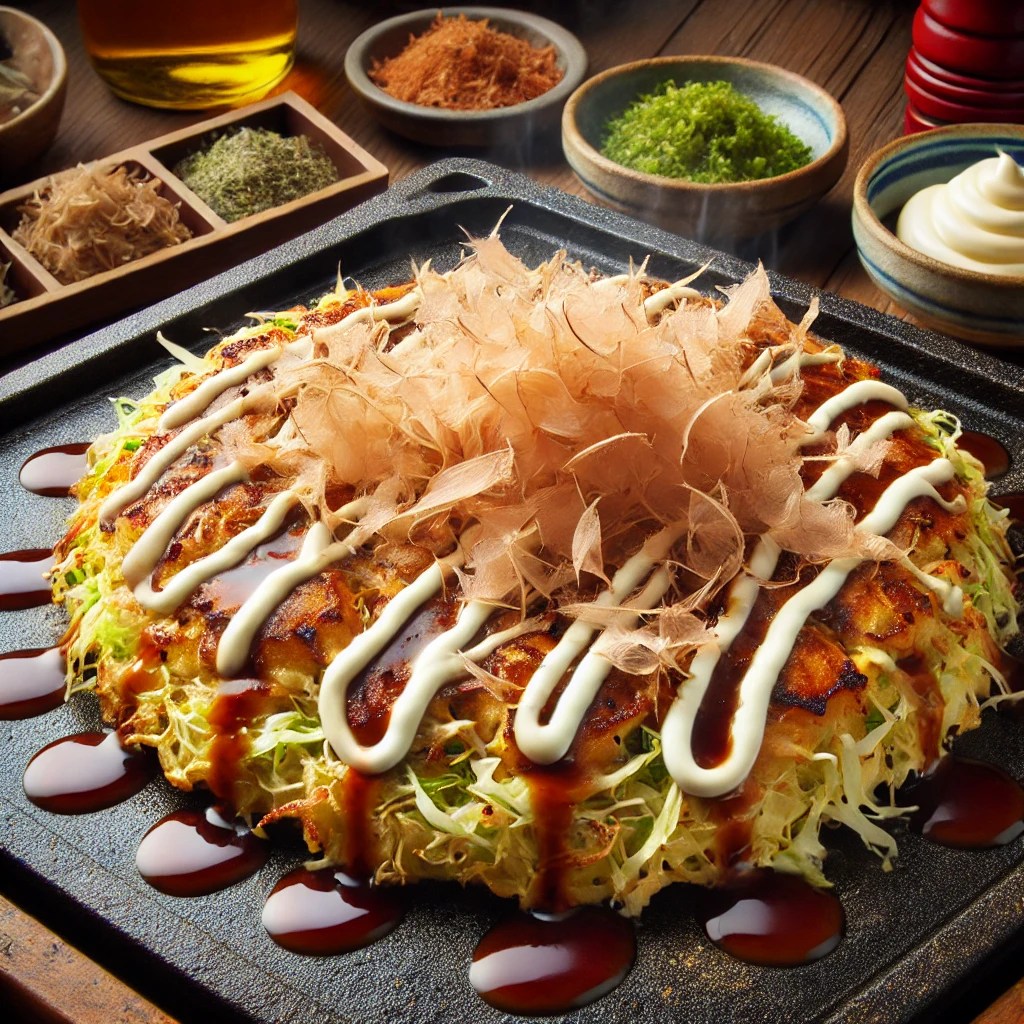
Tsukishima Monjayaki! Just hearing the name brings to mind the sizzling sound and the savory aroma of the batter on a hot griddle, whetting your appetite instantly. Monjayaki is a symbol of Tokyo’s downtown culture, with its unique preparation method and rich flavors captivating many.
History
The origins of monjayaki date back to the late Edo period. Initially known as “moji-yaki,” it was a sweet treat made by mixing flour and water with syrup. By the Meiji era, it had become a popular snack for children in candy shops. During the food shortages of the 1940s, a simpler version made with flour and water, seasoned with basic condiments, became common. Over time, ingredients like cabbage, dried squid, and tempura bits were added, forming the monjayaki we know today (にっぽんの郷土料理観光事典) (Tenposstar).
Characteristics
Monjayaki’s most distinctive feature is its runny batter and diverse ingredients. Cabbage, dried shrimp, cheese, and mentaiko are mixed into a batter made of flour and water, then cooked on a griddle. The unique method involves making a “moat” with the ingredients and pouring the batter into the center, slowly cooking until a crispy layer forms. The joy of eating monjayaki lies in scraping off the crispy bits with a small spatula, creating an irresistible combination of flavors and textures (Tenposstar) (Wikipedia).
How It’s Made
Making monjayaki is simple yet requires some skill. First, mix flour with plenty of water to make a batter, seasoned with Worcestershire sauce. Add ingredients like cabbage, dried shrimp, cheese, and mentaiko. Cook the mixture lightly on a griddle, creating a donut-shaped ring with the ingredients. Pour the batter into the center and cook slowly until the edges are crispy. Enjoy the crispy parts by scraping them off with a small spatula (にっぽんの郷土料理観光事典) (Tenposstar).
Nutritional Value
Monjayaki is a balanced dish with various nutrients. The vegetables like cabbage and green onions are rich in vitamins and minerals, while seafood like shrimp and mentaiko provide high-quality protein with low fat. However, the use of Worcestershire sauce and cheese can increase the calorie content, so it’s important to enjoy it in moderation (ちそう|知識で変わるあなたの暮らし).
Cultural Background
Monjayaki is a culinary symbol of Tokyo’s downtown culture. Particularly in Tsukishima, known as “Monja Street,” many monjayaki specialty shops line the streets. The Tsukishima Monja Promotion Cooperative helps to enhance the area’s appeal, making it a beloved destination for both locals and tourists. Monjayaki is enjoyed by gathering around the table and cooking together, making the experience itself a cherished activity (TRiP EDiTOR) (THE GATE) (【公式】月島もんじゃ振興会協同組合).
Access Information
To enjoy delicious monjayaki, visit Tsukishima’s “Monja Street.” From historical establishments to newer eateries, a wide variety of monjayaki awaits. The Tsukishima Monja Promotion Cooperative offers meal vouchers and take-home monjayaki kits.
Reference Links
Conclusion
Monjayaki is a delightful dish with its unique preparation and rich flavors, representing Tokyo’s downtown culture. The experience of gathering around the griddle and enjoying the crispy, savory bites is simply unbeatable. When in Tsukishima, be sure to try the authentic monjayaki and savor the special moments it brings.
 Soul Food in Japan
Leave a comment