
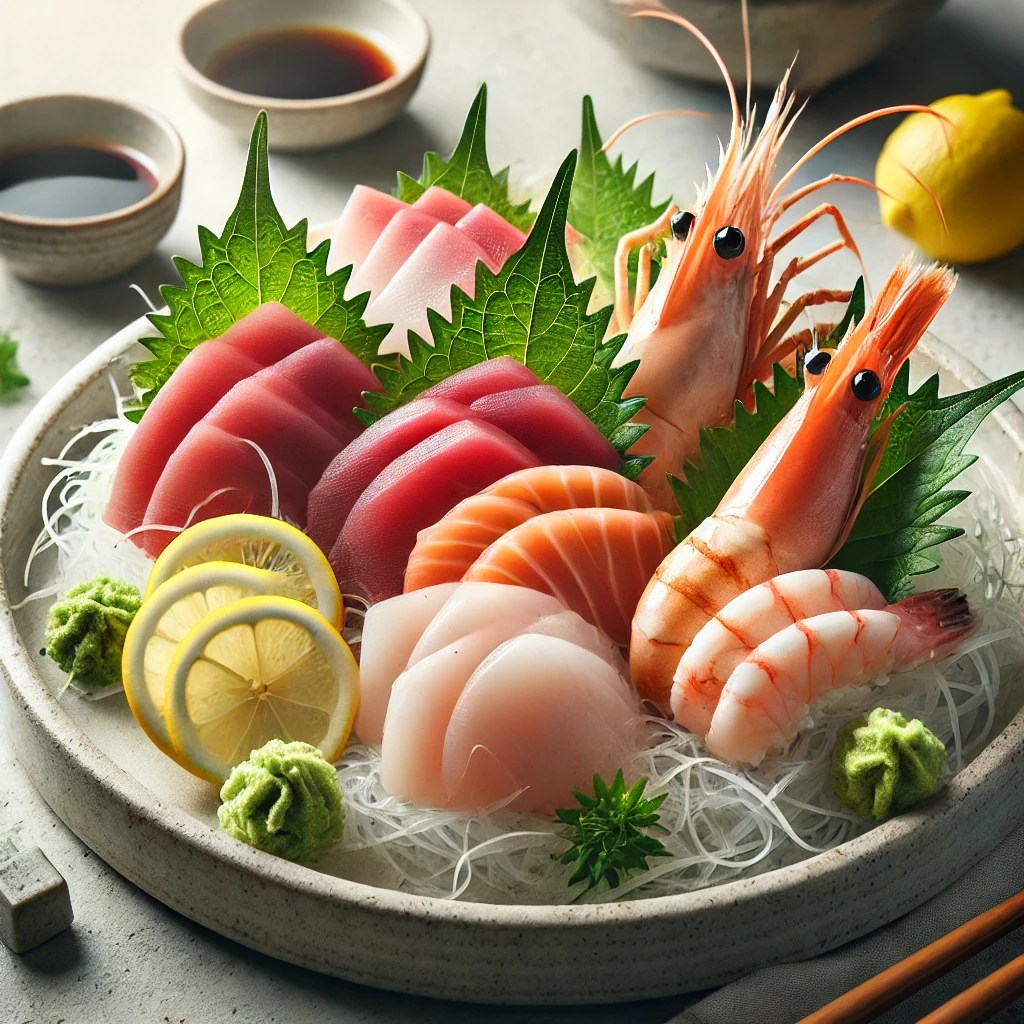
Sashimi! Just hearing the name evokes the delicate taste and melt-in-your-mouth texture of fresh seafood, bringing excitement to your palate. Sashimi is a quintessential part of Japanese cuisine, renowned for its simplicity and exquisite flavors that captivate many.
History
The history of sashimi dates back to the Heian period (794-1185). During this time, the nobility enjoyed eating fresh fish with seasonings (ゆるきじ) (日本文化 | Japanese culture Introduction). The term “sashimi” originated from the practice of presenting fish fillets with the tail or fin of the fish attached to identify the type of fish being served (Wikipedia).
Characteristics
Sashimi consists of fresh seafood sliced thinly and served raw. Common fish used for sashimi include tuna, sea bream, salmon, and squid, each offering unique flavors and textures. The presentation of sashimi is also crucial, with intricate slicing techniques and beautiful plating that enhance its appeal. Sashimi is typically enjoyed with condiments such as wasabi, ginger, and soy sauce (Wikipedia) (ゆるきじ).
Preparation
Preparing sashimi requires skill and precision. First, fresh fish is procured and cleaned thoroughly. A specialized sashimi knife is used to slice the fish thinly. The slicing techniques vary depending on the type of fish and desired presentation, such as hira-zukuri (rectangular slices) or usu-zukuri (thin slices). The sliced fish is then artfully arranged on a plate with garnishes like shredded daikon radish and shiso leaves (日本文化 | Japanese culture Introduction).
Nutritional Value
Sashimi is highly nutritious, offering a high protein content with low fat. Tuna sashimi, for example, is rich in DHA and EPA, which help prevent cardiovascular diseases. Bonito is high in iron, making it effective against anemia. Salmon contains astaxanthin, an antioxidant that promotes health and well-being (はらすのブログ♪).
Cultural Background
Sashimi exemplifies the Japanese concept of “eating with the five senses.” Its visual appeal, aroma, texture, taste, and the atmosphere in which it is enjoyed all contribute to a unique dining experience. Sashimi is a staple in Japanese cuisine, enjoyed in homes and high-end restaurants alike. It is a testament to the Japanese appreciation for fresh, high-quality ingredients and meticulous preparation (日本文化 | Japanese culture Introduction).
Access Information
To enjoy the best sashimi, visit renowned seafood markets and specialty restaurants across Japan. Famous markets like Tsukiji and Toyosu offer the freshest sashimi. Additionally, sushi bars and traditional Japanese restaurants throughout the country provide seasonal and high-quality sashimi.
Reference Links
Conclusion
Sashimi, with its fresh seafood and beautiful presentation, is a hallmark of Japanese cuisine. Its simple preparation and rich flavors make it unforgettable. Be sure to experience sashimi, loved throughout Japan, and savor its unique charm.
 Soul Food in Japan
Leave a comment